Wk6-Art Experience-Art can be Shocking!

Even if you look beyond the clouds… Not a star in the sky.

I chose to do a piece on light pollution because i think the sky, especially stargazing and similar activities are fantastic and inspiring experiences, yet as cities and suburbs grew, light pollution made it so you have to go farther out to see the stars. In LA, it’s nearly impossible to find even one good place for stargazing.

    I hope this piece communicates how even with technological advances that help in almost all aspects of life, some things are lost. What once inspired our ancestors and guided travelers now can’t be seen, even at the latest hours of night. What used to be a wonder that could be seen anywhere now requires hours of travel to even experience a fraction of the wonder.

    I think the idea for my piece is solid, but the picture could have been better. The night that I was free to take a picture was cloudy, and my phone camera is not as high quality as I would like. If I had chosen a different day to take my picture or had a better camera, I think the impact of this piece could have been magnified many times over.

    As mentioned before, I would have spent more time finding a good night, and a good spot to take a picture. With my poor phone camera, I would need a good night a better spot to create the impact that I was expecting.

    Other ideas to explore in shocking art to be along the same avenue. While urbanization has brought many commodities that make life easier and better in most regards, there is always something lost. Talking or showing about deforestation, destruction of wildlife, and pollution could be good alternatives that tie into the downsides of our modern lives.

Wk5-Art Experience-Cameras Tell Stories

This week we were to tell a story through photography:

This is Lincoln, my two year old basset hound, currently ignoring me.

Lincoln does not like pictures, and gives me a side eye glare as I take this one.

As a hound dog, Lincoln loves smelling everything he can. Taking walks with him often takes longer than anticipated.

Lincoln’s bed in the kitchen, where he stays when the house is empty.

Normally not allowed in my room as it’s too messy, Lincoln convinced me to let him in if he stays on the bed where there is nothing to chew on.

Lincoln’s favorite place to sleep, in a pile of blankets at the foot of the couch.

I chose this story because I love my dog, and want to show him to more people. It’s not a big story or a deep story, but he is an important part of my life and I wanted to show him to everyone on my blog.

I think, while a simple story, I did a decent job. The pictures show Lincoln in various places throughout his day, and encapsulate some of his habits and favorite things to do. Not every story needs to be complicated or filled with meaning, sometimes it is good to just have cute pictures of animals.

I personally like the first image the best. It is a good, clear shot of Lincoln, and shows him off the best. While the other photos have other foci, such as the walk or his favorite places to sleep, the first image is just Lincoln.

I do not think that any of the pictures are “great” but overall they tell a story about Lincoln and who he is, and what he likes to do. It is a simple story that doesn’t need great photos to enhance the storytelling.

Next time I would probably attempt to get more action shots. Lincoln loves lounging around as a basset hound, but he is also very active. He wrestles, runs and plays all around the house, and doesn’t just lay around waiting for photos, as this might make it seem.

Photo stories are interesting, but not really what I am into. I don’t think there are other photo stories I would be interested in at the moment, but that could change as my life goes on.

Wk4-Art Experience-Drawing is Language

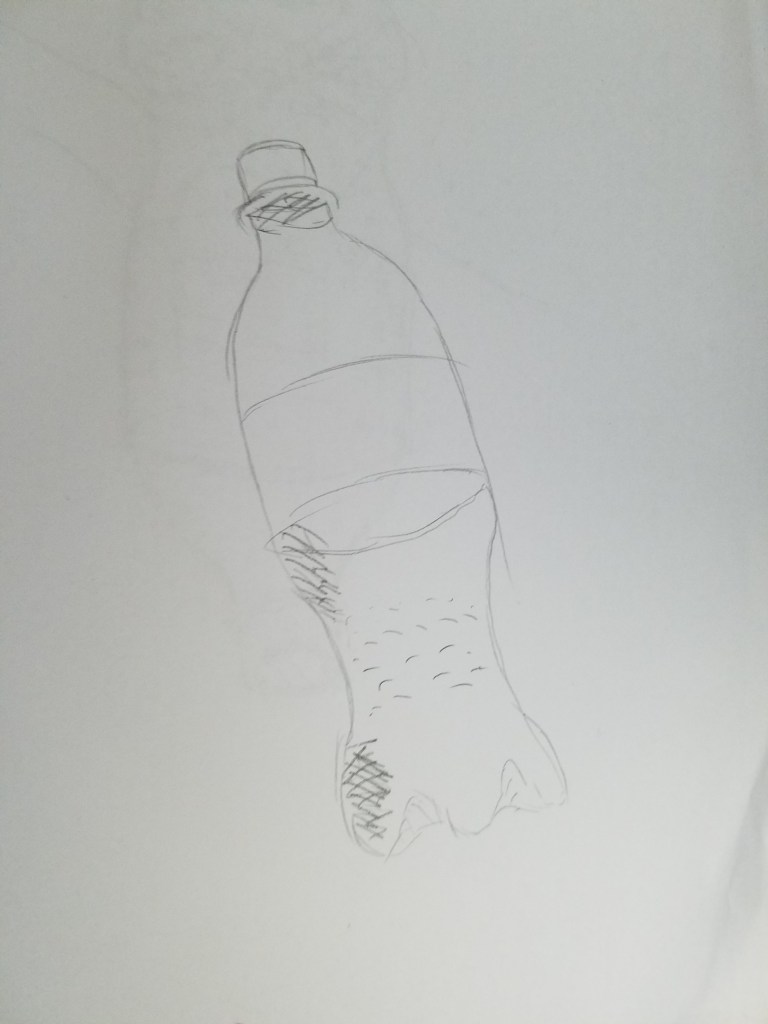
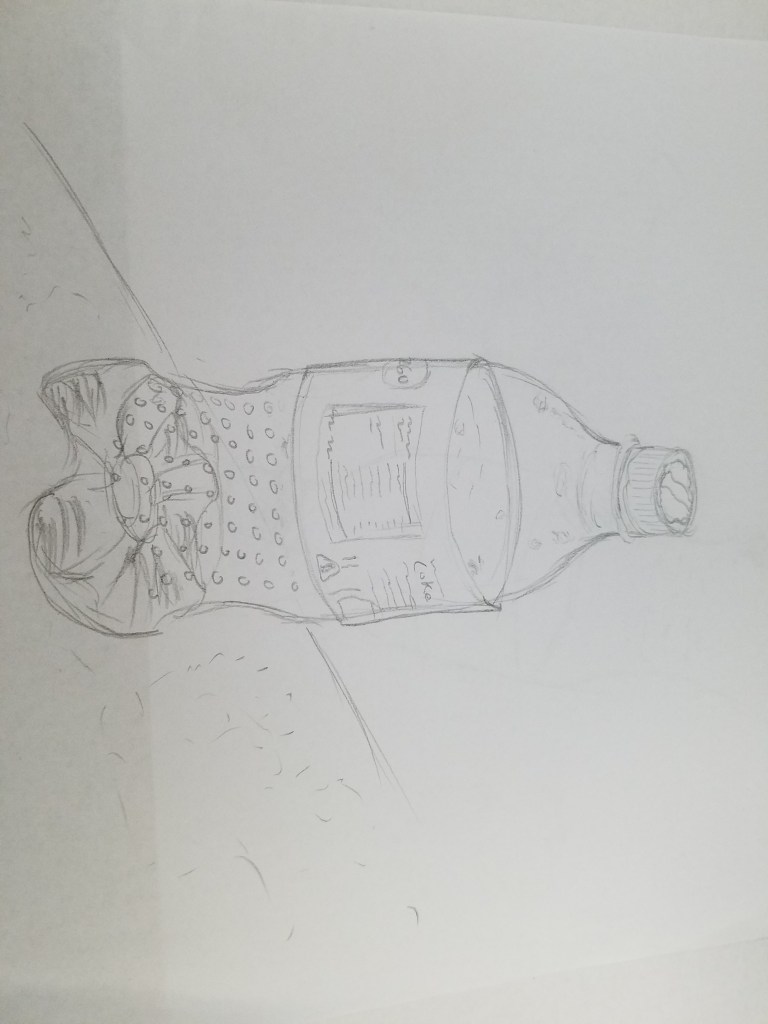
This week’s activities consisted of sketching, trees, drinks, and a contour of my hand holding my drink. Below are my sketches:

    The activity was fun once I got into it, but at the beginning, it was frustrating. Having to draw things that I wasn’t interested in drawing made me not enjoy the  start of the sketch, but as I got farther in the sketching, I accepted it and began to enjoy my attempts at matching whatever I was looking at.

I think if I practiced, I would be way better. Building up coordination, along with understanding different techniques to create a drawing would help immensely. Even so, I don’t think most of my sketches were awful, but I wasn’t confident in what I was drawing. With more hours of practice, I would gain the skills and the confidence to create better works of art.

As a mechanical Engineering major, sketching could be useful in certain cases. Most work is done on computer programs to make 3d modelling of objects easier, but being able to clearly sketch an idea before beginning work on fully fleshing it out could be helpful. The clearer I could draw, the better my coworkers could understand what I was trying to portray with my simple sketch.

Drawing can be considered a language, but these days it’s not quite a formal one. Egyptian hieroglyphics were drawings, yet they were used like a language. In the same way, modern drawing can be a language, but often how we draw is not formulated as a language would be. Even with that said, drawings can definitely say things that words cannot. Drawings can portray feelings and meanings that wouldn’t be fully described in just one or two words.

Wk4-Artist Conversation-Kyunghee Valdez

Exhibition Information

Artist: Kyunghee Valdez

Exhibition: Metal Art Guild Group Show

Media: Metal and Jewelry

Gallery: CSULB School of Art, Gatov Gallery West

About the Artist

Kyunghee Valdez is a student in the School of Art’s Sculpture Program. She enjoys working with mixed media, and used ceramics and metalwork in her art piece. Kyunghee has two pieces in this exhibition, Faith in Light and Passion. Kyunghee enjoys working with metal. She uses the unique way metal can be manipulated to create interesting, meaningful works.

Formal Analysis

 Kyunghee’s first piece, Faith in Light is made solely of copper, though it holds a candle in the center. The copper holds the traditional copper color, and is reflective. Due to the shape of the cut pieces, the candle light from within shines through the cuts. Thes cut pieces have jagged edges and are bent inwards and outwards to create the lighting effect as the candle light passes through. The second piece, Passion consists of copper, ceramics, and sterling silver. Each material plays off the other, as the copper is jagged at the edges, and the silver has small ridges from the forming of the bowl, while the ceramic material is completely smooth. The copper in this piece is darker and more matte than the other piece, which contrasts with the white, reflective ceramic.

Content Analysis

Being able to work with metal allowed the piece to be shaped in ways unlike many other materials. For the piece Passion, Kyunghee mentions how each material gives off a different feeling, but each piece comes together to form a whole. Much like California, she said, her piece represents the diversity of many different, unique mediums coming together to form a cohesive and beautiful piece.

Synthesis / My Experience

The experience of going to an art gallery was quite different than what I was used to. I had previously only been to upper campus at CSULB for classes, but exploring and seeing the different galleries was fun, and being able to talk to Kyunghee about her work was interesting. It was great seeing someone passionate about what they do and what they created, not just talking about the meaning, but she also told me about how she made the pieces. At first I was awkward and did not know quite what to ask or talk about, but as she showed me her work, I got more comfortable and began to enjoy the gallery.

Wk3-Art Experience-You can Find Art Anywhere

For our third week we were asked to find art. To do this we used masking tape to create a “frame” in which we could encapsulate our art. Some groups got creative and used 3D spaces to give there art meaning, and my group did something similar:

Our art used the pillars to create an open, 3D space in which the viewer can look through. The piece is quite large, and due to the 3D space in encapsulates, it is quite a complex piece. It combines a few different aesthetics through different viewing angles, as you can, in the first picture look at the far off pyramid, or the trees between the buildings, or even some of the buildings and view the campus from a different perspective. This gives a pleasant experience, and allows the viewer to find something they like with their own judgment. By placing our frame above the ground, the viewer can experience the campus from an angle they aren’t familiar with, and maybe get a feeling of art all around them.

I would consider the rectangle the thing that created the art, but that doesnt mean the area was not nice to look at beforehand. The art encases the landscape, and thus, the creation of the frame creates something for the viewer. Of course you can look at anything beforehand, but the frame invites the viewer to think deeper about the piece.

The art won’t exist without the frame, so once the frame is gone, the art is gone. But the experience the viewer had stays, and maybe the art piece influenced them to look at their surroundings in a more inspecting mind.

As I mentioned the object itself is not art, but the ideas can be contained and used to create art. To look at another example, using photography as a form of art is valid, but the landscapes or objects considered in the art weren’t art beforehand. It is the containment of the object and the invitation to look deeper into a figure than previously expected that creates art. 

Art does not require itself to be an object. Abstract Ideas can also be art, and they often do not contain a clear object for viewing, but in the same way as a frame invites the viewer to think about the piece, abstract ideas can invite the viewer to understand the piece in a different light.

The viewers’ experience is the important part in art. It is not the piece itself that is important, but the choice the viewer makes in taking time to view, and to think critically about the piece. The object and the frame that create the piece of art are both tools to create an experience for the viewer, with no viewer, there would be no point to art. Thus, it is important to understand what a piece brings to the experience. The actual art is important, but only in the fact that it generates an experience for viewers.

Wk2-Art Experience-Abstraction is Freedom

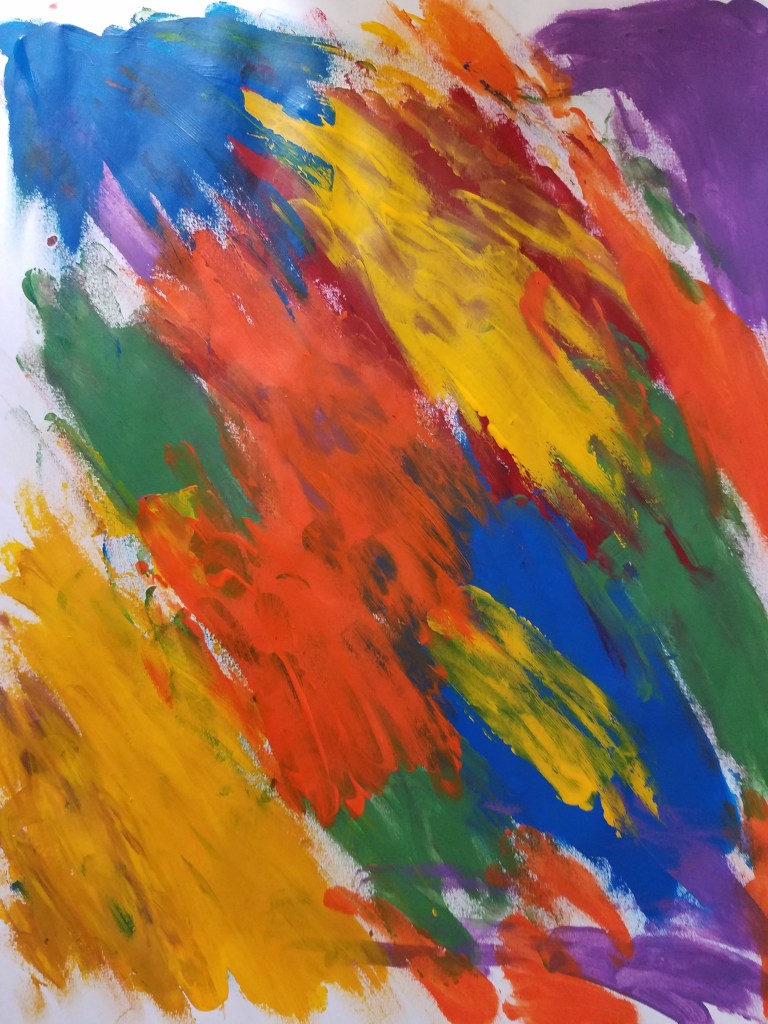
For our second week, we were asked to do some abstract art, via finger painting. Above is my attempt to create something interesting.

The experience was different than I expected. At first I didn’t understand the point of this assignment, but it was entertaining to let myself just paint, instead of following a specific set of goals. In the end, I created something interesting, and while it is simple, I enjoyed the experience.

 It was difficult for me to just let go of form and let my hand wander and paint, even without thinking I noticed that almost all my paint strokes were in the same direction. Though I found it hard to start and to fully let go, as I continued painting, I got more comfortable, grabbed more colors and continued painting. It got easier as I went along, and I tried to make my painting as free as possible.

At first, the act of creating art with no subject was frustrating, I am used to always having something set and ordered for me to follow, but as I got into the painting, my frustration faded and I started to enjoy the experience and felt free to do what I wanted. It felt good to not have to worry about “mistakes” as there was no guidance and I could do what I want, and paint how I felt.

Compared to other abstract paintings, I feel mine is pretty simple. I did not spend much time, and most of the colors were in sections. Most abstract paintings I see try to capture some “feeling” like a chaotic splatter paint or beauty in something simple. Even though I enjoyed the experience, in the end I felt like I was just putting paint on paper, with no deeper meaning.

Wk1-Art Experience #1-“Women’s Work” is also Art

On Wednesday we performed a maintenance art activity at Piotr Kowalski’s 1965 sculpture NOW, where we cleaned the sculpture and some students picked up trash from the surrounding area. Below are some pictures from the event:

  1. The activity of performing maintenance art at this sculpture was interesting. I’m not a very extroverted person, so doing something out in the open was outside my comfort zone, but in the end it was an enjoyable experience
  2. Both Mierle Laderman Ukeles cleaning the steps of an art museum and Richard Serra flinging molten lead against the walls of an art museum can be considered art in their own ways. They differ in the fact that Serra’s art in more deliberate in a way, where the act of throwing the lead is considered art, you can’t really see it as something else, where Ukeles’ art is cleaning can be considered a job in a way that Serra’s lead throwing cannot be considered. Both are the same in the way that they are actions. The art isn’t the “final product”, but the act of working itself.
  3. In relation to Mierle Laderman Ukeles’ Maintenance Art performance at the Wadsworth Atheneum, I would consider it art because she considered it art. In my mind, the intention behind the piece makes it art, rather than the fact it was performed at a museum.
  4. 4. I personally do not believe the medium has any merit in whether something can be considered an art piece or not. What makes art is the intention of the piece. If the artist intends meaning, as simple as beauty or as complex as the meaning of life, . The canvas itself does not make the art. Even painting a house can be art if the artist puts effort and meaning into what he or she is willing to create.
  5. Mierle Laderman Ukeles and Jennifer Lopez have made me think differently about “Women’s Work”. I hadn’t considered the perspective of maintenance as art, and these pieces that we talked about in class has helped me perceive things differently. As I stated earlier, anything is art if the artist intends it to be, so “women’s work” can be art.
  6. I don’t know if there is anyone specific I would go to clean their star on Hollywood Blvd, but I feel that I would attempt to respect everyone. Maybe I wouldn’t go down on my hands and knees to clean any star, but I would try to keep clean and respect all the stars i see.

Introduce Yourself (Example Post)

This is an example post, originally published as part of Blogging University. Enroll in one of our ten programs, and start your blog right.

You’re going to publish a post today. Don’t worry about how your blog looks. Don’t worry if you haven’t given it a name yet, or you’re feeling overwhelmed. Just click the “New Post” button, and tell us why you’re here.

Why do this?

  • Because it gives new readers context. What are you about? Why should they read your blog?
  • Because it will help you focus you own ideas about your blog and what you’d like to do with it.

The post can be short or long, a personal intro to your life or a bloggy mission statement, a manifesto for the future or a simple outline of your the types of things you hope to publish.

To help you get started, here are a few questions:

  • Why are you blogging publicly, rather than keeping a personal journal?
  • What topics do you think you’ll write about?
  • Who would you love to connect with via your blog?
  • If you blog successfully throughout the next year, what would you hope to have accomplished?

You’re not locked into any of this; one of the wonderful things about blogs is how they constantly evolve as we learn, grow, and interact with one another — but it’s good to know where and why you started, and articulating your goals may just give you a few other post ideas.

Can’t think how to get started? Just write the first thing that pops into your head. Anne Lamott, author of a book on writing we love, says that you need to give yourself permission to write a “crappy first draft”. Anne makes a great point — just start writing, and worry about editing it later.

When you’re ready to publish, give your post three to five tags that describe your blog’s focus — writing, photography, fiction, parenting, food, cars, movies, sports, whatever. These tags will help others who care about your topics find you in the Reader. Make sure one of the tags is “zerotohero,” so other new bloggers can find you, too.

Design a site like this with WordPress.com
Get started